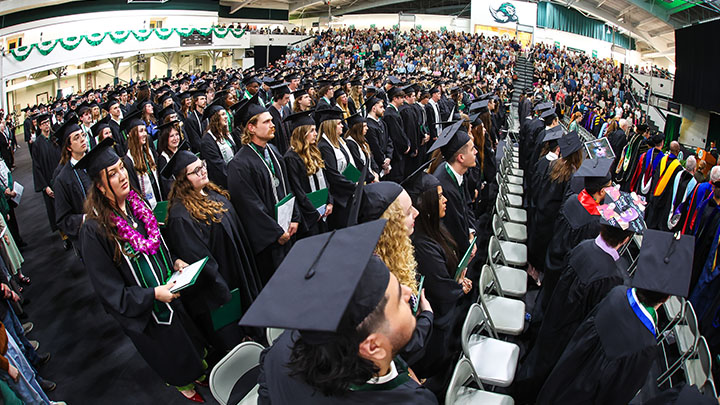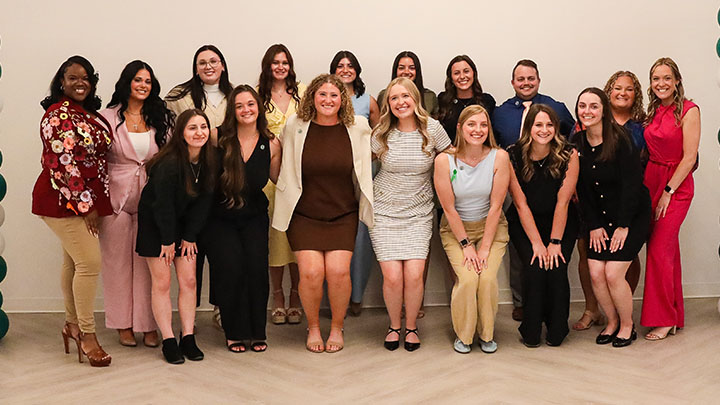


A Slippery Rock University doctoral student emerged as a leader in occupational therapy through impactful research connecting oncology and patient care. Sophia Duncan, ’23, ’26 ODT, who graduated last week from SRU’s Doctor of Occupational Therapy program, conducted research identifying levels of perceived preparedness among occupational therapists to treat cancer patients, as well as the barriers that come between cancer patients and referrals to occupational therapists.
“Cancer survivorship is increasing rapidly,” Duncan said. “With that survivorship comes people left with physical, emotional and psychosocial deficits that occupational therapists can help to treat.”
While the benefits of incorporating occupational therapy into cancer patients’ treatment regimens are undeniable, there is currently an overlooked use of occupational therapy approaches in oncology.
“What we found in our research was that some occupational therapists didn’t feel that their education prepared them to deal with cancer patients, but we also found that many oncologists don’t have clear understanding of what exactly occupational therapists can offer their patients,” Duncan explained.
The core of Duncan’s work is encouraging a greater understanding of occupational therapy and what its function can be in many areas of medicine, including cancer care.
“If you see that your profession is being underutilized in an area where it could be useful, advocate for yourself and for your profession,” said Duncan, who earned her bachelor’s degree from SRU in recreational therapy.
Such advocacy results in better understanding of new treatment approaches and in better outcomes for patients.
Duncan conducted her research under the advisement of Kenneth Reichl, SRU assistant professor of occupational therapy. Duncan maintained that Reichl invested deeply in this project, setting her up for success in exploring and addressing this critical issue.
“I was a research graduate assistant in the education program,” Duncan explained, “and I’d been introduced to the proper formatting of projects like this through that and through my undergraduate work. Between my undergraduate classes, graduate classes and assistantship, and working one-on-one with Dr. Reichl, I was prepared to do this.”
According to Duncan, this project is not over. She and Reichl plan to present the research at national conferences in the next year. More information about the OTD program at SRU is available on the program’s webpage.